The South African betting landscape has evolved dramatically over recent years, with traditional bookmakers now sharing space with innovative betting exchanges. While most punters remain familiar with conventional bookmakers like Betway and Hollywoodbets, betting exchanges offer a fundamentally different approach to wagering that’s gaining traction among savvy South African bettors.
Understanding the distinction between these two betting models is crucial for making informed decisions about where and how to place your bets. This comprehensive guide explores the core mechanics, odds structures, market dynamics, user experience differences, and strategic applications of both bookmakers and betting exchanges in the South African context, helping you determine which platform best suits your betting style and objectives.
Core Mechanics: How Bookmakers and Betting Exchanges Operate
Traditional bookmakers operate as the house, setting their own odds and taking positions against every bet placed. They employ teams of traders and sophisticated algorithms to calculate probabilities and build in profit margins, essentially acting as risk-takers who profit when bettors lose. When you place a bet with Supabets or Betway, you’re betting directly against the bookmaker.
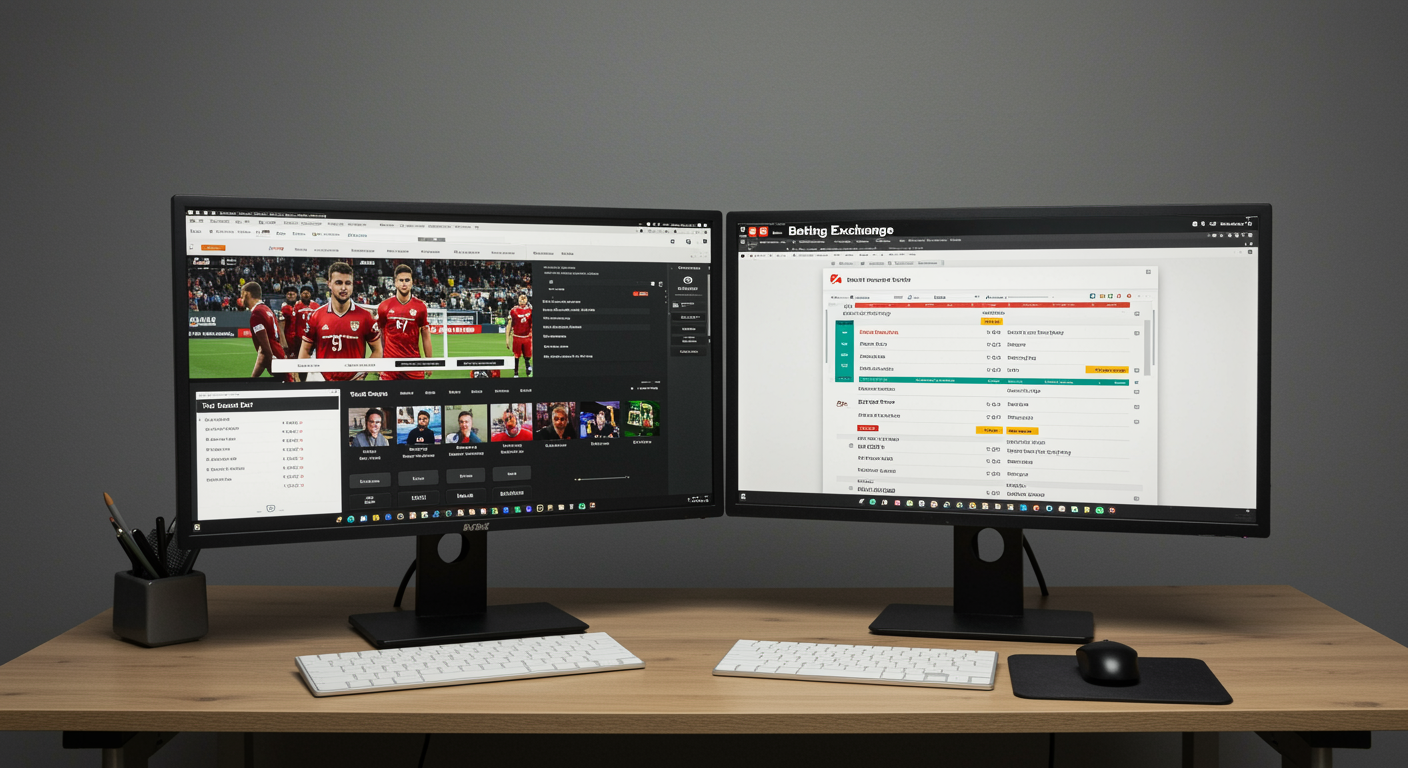
Betting exchanges function as peer-to-peer marketplaces where users bet against each other rather than against the house. The exchange acts purely as an intermediary, matching backers (those betting something will happen) with layers (those betting it won’t happen). This creates a dynamic marketplace where odds fluctuate based on supply and demand, much like a stock exchange.
The fundamental difference lies in risk exposure and profit models. Bookmakers assume liability for every bet and profit from their built-in margins, while exchanges earn commission only on winning bets and never take market positions themselves.
| Feature | Bookmakers | Betting Exchanges |
|---|---|---|
| Who Sets Odds | Bookmaker traders and algorithms | Market users through supply and demand |
| Who You Bet Against | The bookmaker (house) | Other users on the platform |
| Platform Role | Risk-taker and opponent | Neutral intermediary |
| Profit Model | Built-in margin (overround) | Commission on net winnings |
| Market Making | Bookmaker creates all markets | Users can create and request markets |
| Bet Matching | Instant acceptance | Requires matching with another user |
| Account Restrictions | May limit or ban winning customers | Welcome all customers (they profit from activity) |
The Role of Odds: Pricing, Margins and Commission
Bookmakers create odds by calculating true probabilities and then reducing them to build in profit margins, known as overround. For example, if the true probability of the Springboks winning suggests odds of 2.20, a bookmaker might offer 2.00 to ensure profit regardless of outcome. This margin typically ranges from 2-8% depending on the market and bookmaker.
Betting exchanges display odds that reflect the collective opinion of their users, with prices fluctuating as money flows in different directions. Instead of building margins into odds, exchanges charge commission (typically 2-5%) only on net winnings. Consider a Kaizer Chiefs vs Orlando Pirates match: while a bookmaker might offer 2.10 and 1.80 respectively (103.8% overround), an exchange might show 2.18 and 1.85 (100.5% total probability) with 2% commission on winnings.
This structure often means better value on exchanges, particularly for informed bettors who can identify when market odds exceed true probabilities. The commission model also aligns the exchange’s interests with active traders, as platforms profit more from high-volume users rather than restricting successful customers.
Liquidity and Market Dynamics
Bookmakers guarantee liquidity by accepting all bets within their stated limits, ensuring you can always place your wager at published odds. Whether you want to bet R50 or R5,000 on Mamelodi Sundowns to win the PSL, the bookmaker will accept your bet instantly at their quoted price.
Betting exchanges depend on other users to provide liquidity, which varies significantly across markets and times. Popular events like Springboks international matches or Premier League fixtures typically have excellent liquidity, while niche markets may have limited funds available. You might want to back Orlando Pirates at 2.50 with R1,000, but only R400 might be available at that price, requiring you to accept partial matching or worse odds.
This liquidity challenge particularly affects South African bettors during local time zones when European users are offline, potentially reducing available funds for international markets. However, major sporting events maintain robust liquidity around the clock, and many exchanges now offer partial automated market making to improve bet matching rates.
Bet Types and Flexibility
The fundamental difference in betting flexibility lies in the exchange’s ability to offer both backing and laying options. While bookmakers only allow you to back outcomes (bet something will happen), exchanges enable you to act as the bookmaker by laying bets (betting something won’t happen). This creates opportunities for in-play trading, hedging positions, and arbitrage strategies impossible with traditional bookmakers.
Both platforms offer extensive in-play betting, but exchanges provide superior trading opportunities through their dynamic odds and dual-sided markets. Cash-out features exist on both, though exchanges offer more precise control through manual trading and position management.
| Bet Type | Available on Bookmakers? | Available on Exchanges? |
|---|---|---|
| Back Bets (Win) | Yes – Primary offering | Yes – One side of market |
| Lay Bets (Lose) | No | Yes – Core feature |
| Accumulators/Multiples | Yes – Heavily promoted | Limited – Single bets focus |
| In-Play Trading | Basic cash-out options | Full trading capabilities |
| System Bets | Yes – Yankees, Trixies etc. | No – Single bets only |
| Request-a-Bet | Yes – Custom combinations | Limited – Market dependent |
The Lay Bet Advantage: When and Why South Africans Use It
Lay betting allows you to bet against an outcome, essentially becoming the bookmaker. When you lay the Springboks to win at odds of 1.50, you’re betting they won’t win, collecting the backer’s stake if they lose but paying out 1.50 times their stake if they win. This concept might seem complex initially, but it opens numerous strategic possibilities unavailable through traditional bookmakers.
- Hedging and Risk Management: Lock in profits by laying your original back bet during favorable in-play moments, guaranteeing returns regardless of final outcome
- Arbitrage Opportunities: Exploit price differences between bookmakers and exchanges by backing with one and laying with the other for guaranteed profits
- Value Trading: Act as a bookmaker yourself by laying overpriced favorites, particularly useful in South African domestic cricket or rugby where public sentiment often inflates home team prices
- Portfolio Diversification: Balance your betting portfolio by taking opposite positions, reducing overall risk exposure while maintaining profit potential
- Matched Betting Potential: Combine free bets from bookmakers with lay bets on exchanges to convert bonuses into cash with minimal risk
User Experience & Accessibility in South Africa
The user journey differs significantly between bookmakers and betting exchanges, starting from account opening through to bet settlement. Both platform types require identity verification and compliance with South African financial regulations, but the onboarding complexity varies considerably.
- Account Registration: Bookmakers typically offer streamlined sign-up processes optimized for quick deposits and betting, while exchanges may require additional verification due to peer-to-peer transaction requirements
- Deposit and Withdrawal Methods: Most South African bookmakers accept EFT, credit cards, and local payment methods like PayU, while exchanges may have more limited local payment options but often support cryptocurrency deposits
- Bet Placement Process: Bookmaker bets confirm instantly at displayed odds, while exchange bets may require waiting for matching or accepting partial matches at different odds
- Learning Curve: Traditional bookmaker interfaces focus on simplicity and quick betting, while exchanges require understanding concepts like backing, laying, and liability calculations
- Customer Support: Established bookmakers typically offer comprehensive local support in multiple South African languages, while international exchanges may provide more limited regional support
Tech Features and Mobile Usability
South African bookmakers have invested heavily in mobile-optimized platforms, recognizing that most local users bet primarily via smartphones. Apps from major operators like Betway, Supabets, and Hollywoodbets offer intuitive interfaces designed for quick bet placement and account management, with features like fingerprint login and push notifications for local sporting events.
Betting exchanges often prioritize functionality over simplicity, resulting in more complex interfaces that display additional market data, charts, and trading tools. While this provides greater control and information, it can overwhelm casual bettors accustomed to streamlined bookmaker apps. However, leading exchanges now offer simplified mobile interfaces alongside their full-featured desktop platforms, bridging the usability gap for South African users.
Regulatory Environment & Legal Notes
Both bookmakers and betting exchanges operating in South Africa must comply with the National Gambling Act and obtain proper licensing from provincial authorities. Licensed bookmakers like those endorsed by the Responsible Gambling Foundation provide clear legal frameworks and local consumer protections, including dispute resolution mechanisms and responsible gambling tools.
International betting exchanges occupy a more complex regulatory position, with some operating in legal grey areas while others maintain proper offshore licensing. South African players should verify the licensing status and regulatory compliance of any platform before depositing funds, ensuring access to proper consumer protections and legitimate withdrawal processes.
Odds, Profit and Risk: Which Is Better for the South African Bettor?
The profitability comparison between bookmakers and exchanges depends heavily on your betting style, market knowledge, and risk tolerance. Exchanges typically offer better odds due to their commission-based model rather than built-in margins, but success requires more sophisticated understanding of market dynamics and liquidity management.
Consider a practical example involving Kaizer Chiefs playing Cape Town City. A traditional bookmaker might offer Chiefs at 1.85 with a 5% margin built in, while an exchange shows 1.90 available with 2% commission on winnings. A R1,000 winning bet returns R1,850 with the bookmaker but R1,862 on the exchange (R1,900 minus R38 commission), demonstrating the exchange advantage.
Risk profiles differ substantially between platforms. Bookmakers limit your losses to your stake amount, while laying on exchanges creates liability exposure. Laying Chiefs at 1.90 with R100 potential winnings means risking R900 if they win, requiring careful bankroll management and position sizing.
| Aspect | Bookmakers | Betting Exchanges |
|---|---|---|
| Typical Odds Value | 2-8% margin built in | 2-5% commission on wins only |
| Maximum Loss Risk | Limited to stake amount | Can exceed stake when laying |
| Account Restrictions | May limit successful bettors | Generally welcome all customers |
| Market Availability | Wide range guaranteed | Liquidity dependent |
| Profit Potential | Limited by margin and restrictions | Higher for skilled traders |
| Complexity Level | Simple and straightforward | Requires market understanding |
Who Should Choose Each Platform?
Platform selection should align with your betting experience, objectives, and risk tolerance. Each model serves different types of bettors optimally, though many successful punters utilize both strategically.
- Casual Bettors: Bookmakers offer simplicity, guaranteed odds acceptance, and familiar betting formats perfect for recreational wagering on Springboks matches or Premier League fixtures
- Value Hunters: Exchanges provide better odds and welcome skilled bettors, making them ideal for those who consistently identify market inefficiencies and profitable opportunities
- Professional Traders: Serious bettors benefit from exchange tools like in-play trading, laying capabilities, and absence of winner restrictions, enabling sophisticated strategies impossible elsewhere
- Risk-Averse Players: Bookmakers limit losses to stake amounts and offer straightforward cash-out options, while exchanges require careful liability management when laying bets
Advantages and Disadvantages: A South African Perspective
Understanding the specific benefits and drawbacks of each platform helps South African bettors make informed decisions based on their individual circumstances and betting objectives. Local factors like payment methods, customer support, and market availability significantly influence platform suitability.
Bookmakers excel in user experience and accessibility, offering comprehensive coverage of local sporting events, multiple payment options including popular South African methods, and customer support in local languages. However, they may restrict successful customers and offer lower odds due to built-in profit margins.
- Bookmaker Advantages: Instant bet acceptance, comprehensive market coverage including local events, established local payment methods, customer protection under SA gambling laws, user-friendly mobile apps optimized for casual betting
- Bookmaker Disadvantages: Built-in profit margins reduce value, account restrictions for winning players, limited strategic betting options, no laying capabilities for hedging positions
- Exchange Advantages: Better odds through commission model, welcome all customers regardless of success, unique laying and trading opportunities, superior value for informed bettors, no arbitrary bet restrictions
- Exchange Disadvantages: Liquidity limitations especially for local markets, complex interfaces requiring learning curve, limited local payment options, potential liability exposure when laying bets
Common Pitfalls and How to Avoid Them
Many South African bettors make costly mistakes when transitioning between bookmakers and exchanges, often due to misunderstanding the fundamental differences in how these platforms operate. Avoiding these common errors can save significant money and frustration.
- Ignoring Liquidity Constraints: Always check available liquidity before placing large exchange bets, as insufficient matching can result in partial fills at worse odds than expected
- Misunderstanding Commission Impact: Calculate total costs including commission when comparing exchange odds to bookmakers, as headline rates can be misleading without factoring in the fee structure
- Overcomplicating Exchange Strategies: Start with simple back bets on exchanges before attempting complex lay betting or trading strategies that require advanced understanding of liability and risk management
- Neglecting Account Diversification: Maintain accounts with both types of platforms to avoid being locked into inferior odds or restricted betting options when opportunities arise
Best Practices for SA Bettors Using Exchanges
Maximizing exchange profitability requires understanding unique aspects of peer-to-peer betting markets and implementing appropriate strategies for the South African context. These practices help optimize returns while managing the additional complexities exchanges introduce.
- Focus on High-Liquidity Markets: Concentrate on popular international events during peak European trading hours to ensure sufficient matching and competitive odds
- Calculate True Liability: When laying bets, always compute your maximum loss exposure and ensure it aligns with your bankroll management strategy to avoid devastating losses
- Monitor Pre-Match to In-Play Transitions: Exchange odds often become more efficient and liquid once events start, creating opportunities for better prices and position management
- Utilize Partial Matching Strategically: Accept partial matches on strongly-favored positions while waiting for full matching on speculative bets where timing is less critical
- Maintain Detailed Records: Track commission costs, liquidity challenges, and market timing to refine your exchange strategy and identify the most profitable opportunities
Strategic Use: Combining Bookmakers and Betting Exchanges in SA
Sophisticated South African bettors increasingly utilize both bookmakers and betting exchanges strategically, exploiting the strengths of each platform while mitigating their respective weaknesses. This dual-platform approach enables risk management strategies, arbitrage opportunities, and enhanced value extraction impossible when using either model in isolation.
The most common strategic application involves using exchanges to hedge positions initially taken with bookmakers, effectively creating guaranteed profits regardless of event outcomes. For example, backing the Springboks at 2.20 with a bookmaker for R1,000, then laying them at 2.10 on an exchange for R1,048, creates a risk-free profit of approximately R28-R38 after commission, depending on the outcome.
Account restrictions present another strategic consideration, as successful bookmaker customers often face limits while exchanges welcome profitable traders. Many experienced bettors maintain multiple bookmaker accounts for accessing the best odds and promotions, while using exchanges for larger positions and sophisticated trading strategies. However, this approach requires careful documentation for tax purposes and awareness of potential regulatory implications when moving funds between platforms frequently.
Arbitrage and Matched Betting Opportunities
South African bettors can exploit price discrepancies between bookmakers and exchanges through systematic arbitrage and matched betting strategies, though success requires careful execution and awareness of potential account restrictions from bookmakers.
- Identify Price Discrepancies: Use odds comparison tools to find situations where bookmaker odds exceed exchange lay prices, accounting for commission costs and ensuring sufficient liquidity exists
- Calculate Optimal Stakes: Determine precise stake amounts for each platform to guarantee profits regardless of outcome, using arbitrage calculators to ensure mathematical accuracy and account for commission fees
- Execute Simultaneously: Place both back and lay bets quickly to avoid odds movements, starting with the less liquid exchange market before placing the bookmaker bet
- Monitor for Restrictions: Track bookmaker responses to your betting patterns, as consistent arbitrage profits often trigger account reviews and potential stake limitations that can compromise long-term profitability